“Crisis – Order – Europe” is the title of the final report from the year‑long project Review 2014 – A Fresh Look at German Foreign Policy. Foreign Minister Frank-Walter Steinmeier presented the report to the German Bundestag and the public on 25 February 2015.
We want to continue something that emerged during the debate on Review 2014. The German public seems to be interested in discussing foreign policy.
When Foreign Minister Steinmeier took up office in December 2013, he said that the aim of Review 2014 – A Fresh Look at German Foreign Policy was to conduct a “process of reflection on German foreign policy’s future prospects by way of dialogue between the Federal Foreign Office and the most important foreign and security policy stakeholders, including civil society”.
Foreign Minister Steinmeier summed up the results of the review process and presented the final report on the dialogue on Wednesday (25 February): I believe that we achieved many things in the past year. We have shown the German public that foreign policy is about more than just two extremes: either just talking or shooting, either futile diplomacy or Bundeswehr deployments abroad.
"The world has changed, and the Federal Foreign Office also needs to change"
The final report highlights the experiences during the three phases of the review process, which included discussion with experts from Germany and abroad, public debate in Germany with over 60 sessions with members of the public, panel discussions, workshops, simulations and talks with Federal Foreign Office staff.

Read the final report here.
The rapid global changes of the past year from Ukraine to West Africa lent momentum to the debate. “When I look back at the review year of 2014, one feature stands out particularly clearly: the fact that the strategic review was conducted during a time of acute crises,” Steinmeier said. “This meant the debate did not take place in a vacuum, but was always based on concrete examples. While German foreign policymakers were taking stock of their work in Review 2014, they were being put to a very tough test by events around the world,” Steinmeier said.
The conclusion was: “The world has changed, and the Federal Foreign Office also needs to change,” Foreign Minister Steinmeier said during the presentation of the report. The title “Crisis – Order – Europe” describes the medium‑term challenges facing German foreign policy, that is, crisis prevention, crisis management and post‑crisis support; shaping the elements of a new global order; and embedding German foreign policy even more firmly in Europe.
Mobilising resources and increasing strategic capability
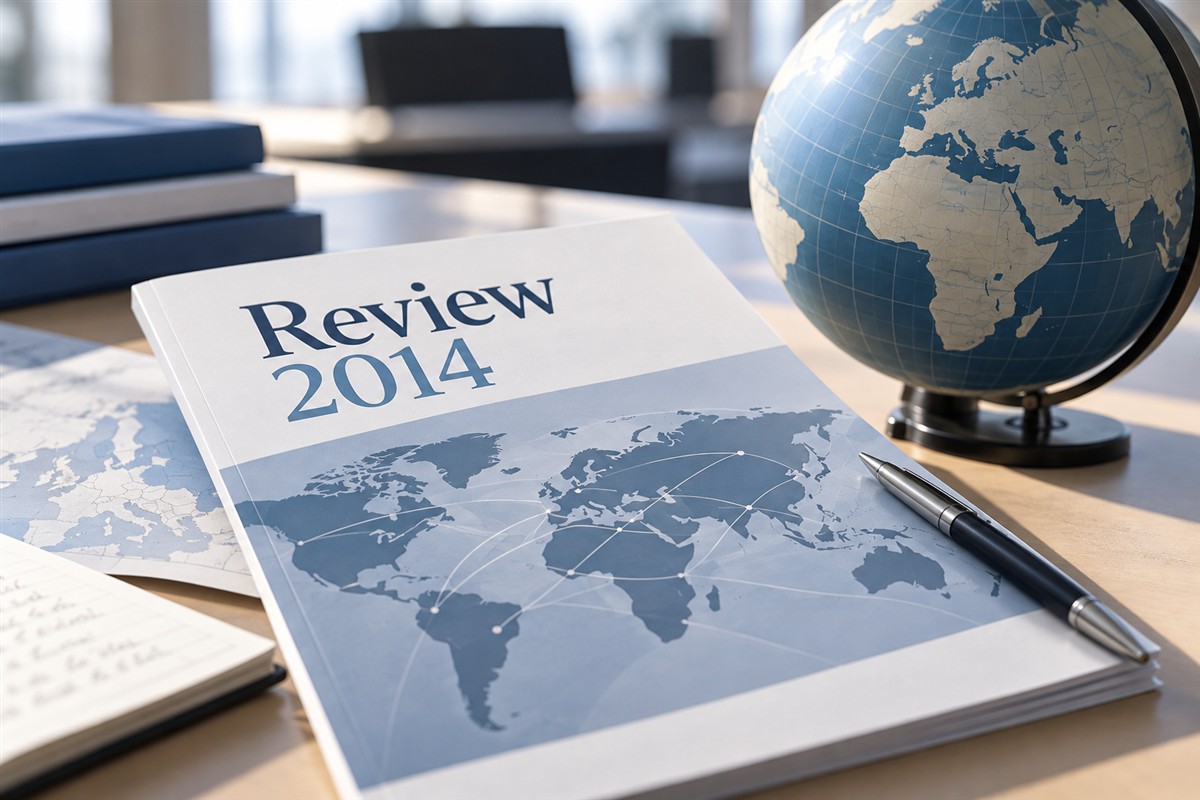
Die Abschluss-Broschüre
Die Abschluss-Broschüre
© AA
The report reaffirms the cornerstones of German foreign policy. It also expresses the aim of acting “sooner, more decisively and more tangibly”, and backs up this goal with concrete measures for the work of the Federal Foreign Office.
The aim is to mobilise the foreign service’s resources even more effectively and to increase strategic capability. Among other things, this will involve changing the management and communication culture, defining priorities and secondary goals more precisely on all levels, and making the foreign service more interconnected.
The Foreign Minister also announced structural changes in the Federal Foreign Office: "Crises will tend to be the norm in the next 10 to 15 years. We are responding to this by restructuring our organisation and creating a separate Crisis Prevention, Stabilisation and Post‑conflict Peacebuilding Directorate-General."
Steinmeier said the plan was to “pool all of the skills that allow us to deal more intensively with the entire spectrum of crises, not only acute conflict phases. We want to learn from the experience of our Crisis Response Centre. However, the aim is that the new directorate-general will be far more active at the policy level,” Steinmeier said.
Merging the directorates-general for disarmament and United Nations
The structure of the Federal Foreign Office will also be changed as regards the topic of international order. In order to maintain and further the established international order of the United Nations and other international organisations, the Federal Foreign Office’s disarmament and United Nations directorates‑general will be merged, Steinmeier announced. "We are thus creating a place where we can make extensive use of our most important principle for international order, namely multilateralism."
Commenting on the third area, Foreign Minister Steinmeier said: "We thought and talked a lot about Europe in this review. Many experts around the world regard Germany as the leading power in Europe, a power that should generate greater influence for the European model in world affairs."
Steinmeier said the aim was to embed Europe to an even greater extent in German foreign policy and the Federal Foreign Office’s structures as regards “staffing, structures and principles”.

Staatssekretär Stephan Steinlein
Staatssekretär Stephan Steinlein
© AA
Making open discussion with the public a permanent feature
Other important points include making the Federal Foreign Office more open and expanding foreign policy communication in Germany by conducting a genuine dialogue with the public. “We want to continue something that emerged during the debate on Review 2014. The German public seems to be interested in discussing foreign policy,” Steinmeier said. “This is why we also want to speak more about foreign policy, responsibility and the limits of responsibility in Germany in the future.”
The aim is to make the positive experiences of open discussions with the public in Germany during Review 2014 – A Fresh Look at German Foreign Policy a permanent feature of the way the Federal Foreign Office works, and to expand this dialogue.
Implementation within 18 months
The Federal Foreign Office clearly has plenty of work ahead of it. The plan is to start implementing the results of Review 2014 immediately and to conclude this work, which will be coordinated by a special unit, within 18 months. Commenting on this, Foreign Minister Steinmeier said: The motto of the review process was ‘a fresh look at German foreign policy’. Now we have moved on to the next stage, where the motto is ‘doing German foreign policy better’.


